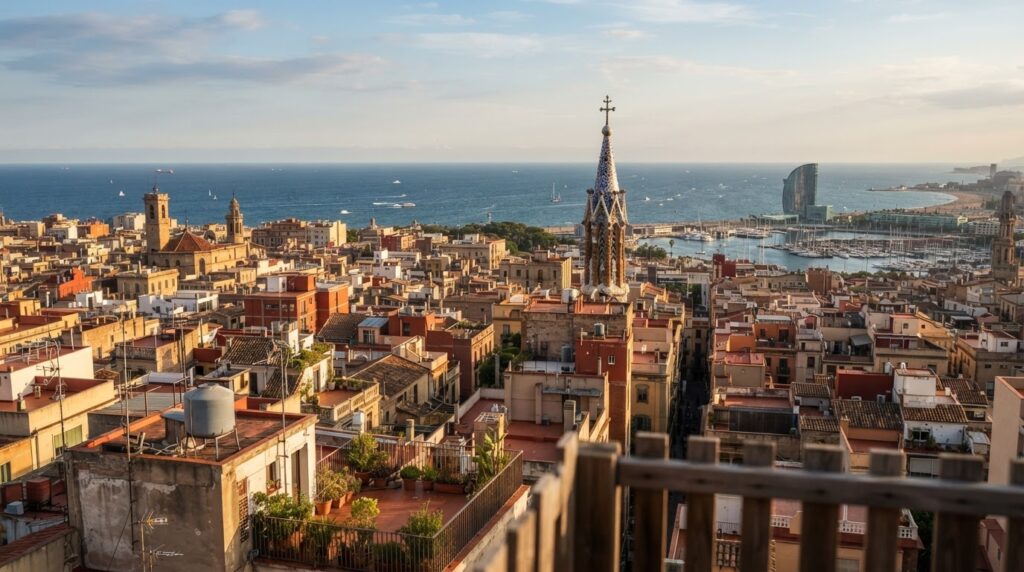
Barcelona offers a rare combination of historic streets, distinctive architecture, neighborhood squares, cultural institutions, and Mediterranean waterfront. Its best-known sights can fill a first visit quickly, but the city’s character becomes clearer when you leave time between them. A thoughtful route might include one architectural landmark, a walk through a different district, and a pause near the sea or in a park. The aim is not to see every attraction; it is to understand how the city’s many parts fit together.
Begin with the city’s varied architecture
Barcelona’s architectural story stretches from Roman remains and medieval streets to Modernisme and contemporary design. The Gothic Quarter contains historic lanes and civic buildings that reward slow observation. Nearby El Born combines medieval traces, cultural spaces, and local businesses. In Eixample, broad avenues and the distinctive block layout create a different urban rhythm. Modernista buildings by Antoni Gaudí and other architects are major draws, but they sit within a wider history of changing ideas about how a city should grow.
Landmarks such as the Sagrada Família, Park Güell, Casa Batlló, and La Pedrera are often on visitor lists. Their popularity means planning matters. Check official attraction pages for current access arrangements, opening hours, and any need to reserve entry. If you visit several architectural sites, space them out and consider exploring the streets around them rather than moving straight to the next queue.
Choose neighborhoods by interest
Ciutat Vella contains several distinct areas, including the Gothic Quarter, El Raval, and El Born. They offer historic architecture, museums, food, and varied street life. Eixample is easier to navigate in a grid and gives visitors a chance to see Modernista façades alongside shops and cafés. Gràcia has village-like squares and independent businesses, while Poblenou blends creative spaces with a changing waterfront district.
Montjuïc offers a different experience, with gardens, cultural venues, open spaces, and elevated views. It can take a half day to explore properly, especially if you include museums or longer walks. Barceloneta and the neighboring waterfront areas put the sea at the centre of the day. The best district depends on what you want to do, how much walking suits you, and whether your group prefers a busy central setting or a quieter pace.
Give the waterfront and parks real time
Barcelona’s relationship with the sea is part of its modern identity. A walk along the waterfront can be an easy way to step away from crowded streets, but beaches are public spaces shared with residents. Follow local rules, protect belongings, use marked access routes, and keep the area clean. Summer conditions can be hot and crowded, so consider a morning visit or a walk at a cooler time of day.
Parc de la Ciutadella offers shaded paths and open space near the old town. Montjuïc’s gardens provide longer walks and views, and several city parks help balance a sightseeing itinerary. Parks are useful for families and for travelers who need a slower stretch of the day. Check whether any event, renovation, or temporary closure affects a particular site before planning around it.
Make museums and markets part of the route
Barcelona’s museums span art, history, design, and local heritage. The Picasso Museum and Museu Nacional d’Art de Catalunya are among the best-known cultural stops, while smaller institutions can offer a more focused visit. Choose based on your interests rather than trying to fit multiple large collections into one afternoon. Museum time is easier to enjoy when you balance it with a meal, a neighborhood walk, or a rest in a public square.
Markets are part of everyday city life as well as visitor culture. La Boqueria is famous and central, but it can be busy; other neighborhood markets offer a different picture of local routines. Be considerate when photographing vendors and shoppers, and remember that markets are places where people buy food, not simply attractions. If you want to sample local dishes, explore menus thoughtfully and ask about ingredients where necessary.
Connect places without overplanning
Barcelona’s districts are connected by public transport and walkable routes, but a map can underestimate the time needed for crowds, heat, or a museum visit. Group nearby places. One day might focus on the old town, another on Eixample architecture, and a third on Montjuïc or the seafront. Add only one or two major timed attractions to a day. The city becomes more comfortable when the schedule includes open time.
For travelers with mobility needs, families with strollers, or anyone who wants fewer stairs, check access information for stations, venues, and public spaces in advance. Street surfaces and access vary by neighborhood and building. Current transport information should come from official local sources, since service arrangements can change.
Travel responsibly in a busy city
Barcelona is home to people who live and work in its visitor districts. Keep noise low in residential streets, respect building entrances, avoid blocking sidewalks, and follow signs at parks and beaches. Support local businesses where possible and dispose of waste correctly. If an area feels crowded, explore a nearby district rather than adding to a bottleneck.
Before setting out, verify opening times, ticket access, transport updates, and public-space rules through official websites. The city’s character is best experienced with curiosity and care. This guide is independent information and does not sell admissions or make reservations.
Frequently asked questions
How should a first-time visitor organize Barcelona?
Choose one district or cluster of nearby attractions per day. Combine a major landmark with a meal, park, or walk, and leave space for a slower pace.
Is Barcelona only about Gaudí architecture?
No. Modernisme is an important part of the city’s identity, alongside Roman and medieval history, contemporary culture, local markets, parks, museums, and the waterfront.
What should travelers check before visiting a major attraction?
Confirm current hours, ticket procedures, access requirements, and temporary closures on the attraction’s official website.
Official resources
Add a seafront day without rushing
Barcelona’s waterfront can be a welcome change of pace after museum and architecture visits. Choose a beach or promenade that matches your group’s needs, check current swimming and facility information, and allow time to travel there and back. The seafront can be busy, so keep belongings secure and use marked crossings. If conditions are not suitable for swimming, a walk and a relaxed meal can still make a good outing.
Plan the city by nearby areas: pair a central architecture walk with a museum or market, then dedicate another part of the trip to a neighborhood such as Gràcia or El Born. Confirm entry details for major attractions and leave time between timed visits. For accommodation, compare distance to transit, street noise, and the full price before booking. Our rental guide can help you weigh those trade-offs.
Planning a Comfortable Stay in Barcelona
Where you stay can shape the rhythm of a Barcelona visit. The Gothic Quarter and El Born make it easy to explore historic lanes on foot, though their busiest streets can be lively late into the evening. Eixample offers broad avenues, architecture, and frequent transit, while Gràcia has a more neighborhood-focused feel with small squares and independent cafés. Near the coast, check the distance to a metro station as well as the beach; a short walk on a map can feel longer in summer heat.
Build in time between major sights rather than trying to cross the city repeatedly. Group a morning around one area, pause for lunch, and leave the afternoon flexible for a museum, a market, or a slower walk. Reserve timed-entry attractions in advance when required, and confirm current opening hours with the venue. For a rental, read the listing carefully for stairs, lift access, air conditioning, and quiet hours, especially in older buildings. Respect local residents by keeping noise low in shared stairwells and disposing of rubbish according to the host’s instructions.
Barcelona rewards visitors who leave room for ordinary moments: a coffee in a small plaza, a walk beneath the plane trees, or an evening meal away from the busiest waterfront streets. A practical base and a realistic daily plan make those moments easier to find.