Packing for a vacation rental differs from packing for a hotel because each property supplies a different mix of household items. The goal is not to bring your entire home; it is to pack the essentials and verify what is already available. Use this checklist as a starting point, then adapt it to the destination, season, trip length, and needs of your group.
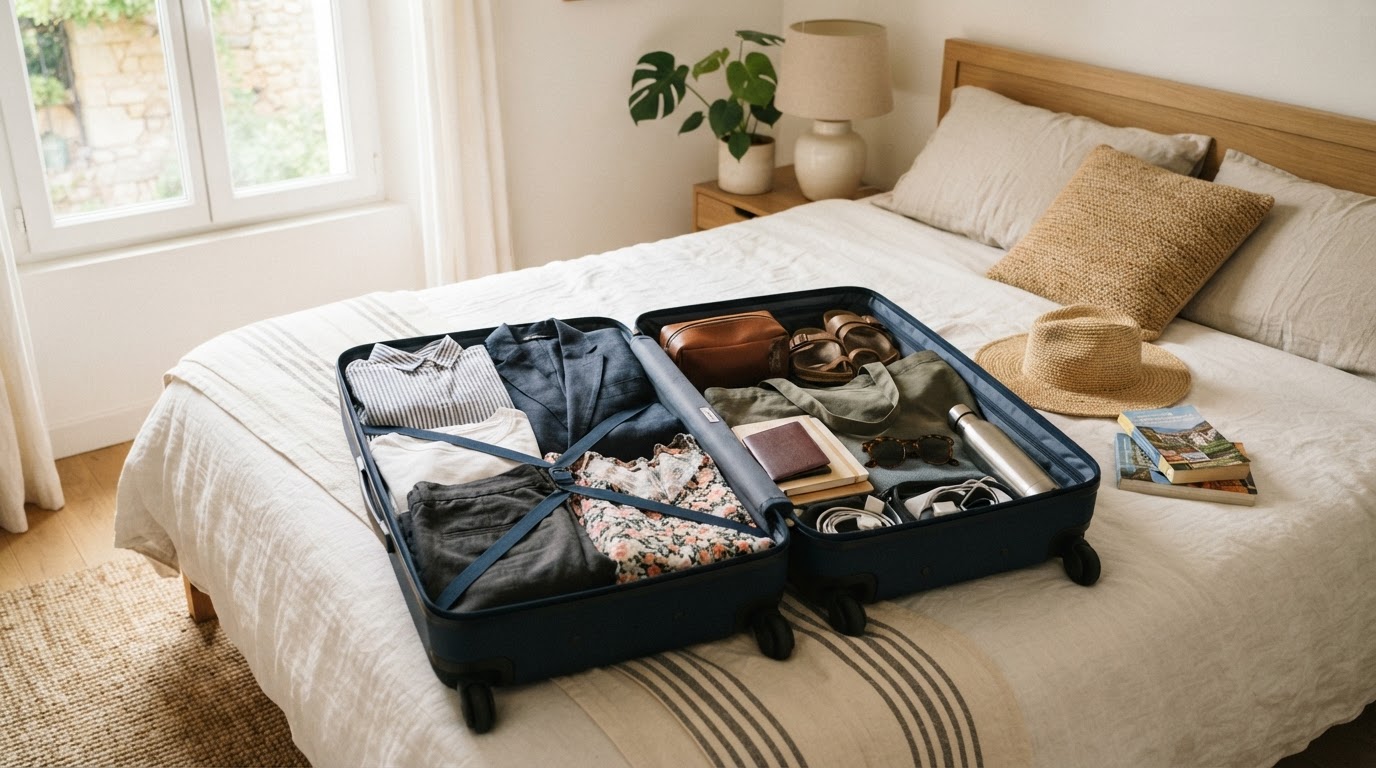
Start with travel essentials
Keep identification, payment cards, reservation details, travel tickets, and insurance information in a secure, easy-to-reach place. Save booking confirmations, the property address, check-in instructions, and host contact information offline or in a location accessible without a strong signal. If several people are traveling together, let one trusted companion know where critical details are stored.
Pack chargers, a suitable power adapter, medication, glasses or contact supplies, and any essential medical devices in your carry-on or personal bag. Keep medication in its original packaging when appropriate and check travel rules for the route. A small first-day pouch with a change of clothes, basic toiletries, and needed chargers can help if luggage is delayed or check-in happens later than expected.
Choose clothes for the actual activities
Use the forecast and itinerary to choose layers rather than packing many single-use outfits. Include comfortable walking shoes, activity-specific footwear, sleepwear, and weather protection suited to the trip. If you expect outdoor time, consider sun protection, a light rain layer, or warm accessories depending on the location and season. For a longer stay, ask whether laundry is available and whether it is inside the unit or shared.
Think about how clothing will be stored and dried. A beach or hiking trip may need extra bags for wet or dirty items; a city stay may call for fewer shoes and more versatile outfits. Avoid assuming that every rental provides laundry detergent, hangers, or an iron. Check the amenity list and pack a small amount only if you expect to need it.
Check household supplies before you pack
Ask what is supplied: towels, bed linen, soap, toilet paper, hair dryer, cookware, coffee equipment, cleaning products, and laundry supplies can vary. Some properties provide a starter amount rather than enough for a long stay. For a special item, such as a baby cot or a particular kitchen appliance, confirm it directly before booking and again before arrival if it is essential.
Do not bring bulky items simply because a past rental lacked them. A quick message can clarify whether towels, a kettle, a high chair, or beach equipment is available and whether its use has a fee. If you do need to bring a must-have item, pack it where it will be easy to find on arrival. “Equipped kitchen” does not necessarily mean the same set of tools at every property.
Pack a flexible food and comfort kit
For a self-catered stay, plan the first meal and breakfast before you travel. You might bring a few shelf-stable snacks or familiar items that help the group settle, while buying fresh food near the destination. Check local transport and store hours rather than packing a full pantry. If the rental has a kitchen, confirm its equipment and consider whether you genuinely want to cook during the trip.
A small comfort kit can include reusable water bottles, a sleep mask, earplugs, tissues, a compact reusable bag, and any personal items that make travel easier. Families may need familiar bedtime objects or feeding supplies; remote workers may need headphones and a backup charger. Keep the kit tailored to the travelers rather than adding generic gadgets that take space and are unlikely to be used.
Plan for children, pets, and accessibility needs
If traveling with children, confirm the availability and condition of any crib, high chair, stair gate, or child-friendly equipment you plan to use. Ask for exact details and bring alternatives when the item is critical to safety or comfort. Pack snacks, entertainment for travel, and necessary medication in easy reach. Consider the room layout and sleeping schedule when deciding what will help the first night go smoothly.
For pets, verify that the listing permits them and review rules about fees, furniture, outdoor areas, and leaving animals unattended. Bring the items your pet relies on, such as a leash, food, bowls, bedding, and waste bags. For accessibility needs, confirm routes, bathroom setup, door widths, elevators, and steps rather than relying on broad claims. Pack any personal equipment or comfort aids that cannot be guaranteed at the rental.
Organize luggage for arrival and checkout
Separate essentials from items that can stay packed. A small arrival bag helps with keys, water, snacks, toiletries, and a change of clothes while you figure out the property. Keep valuables, medication, and travel documents secure. If the rental has limited storage, packing cubes or a foldable bag can help contain clothing without requiring more furniture than the space provides.
Before leaving, check the checkout list and leave enough time to gather chargers, medication, and personal belongings. Put laundry or waste where the host requests, but do not assume that extensive cleaning is required unless the terms say so. Take a quick look in drawers, bathrooms, charging areas, and under beds. A simple final sweep is easier when every traveler knows what they are responsible for collecting.
A short printable-style list
Documents and access: identification, booking details, payment card, address, arrival instructions, and provider contact. Personal essentials: medication, glasses, chargers, toiletries, and a change of clothes. Clothing: layers, comfortable shoes, sleepwear, and activity-specific items based on the real itinerary and forecast.
Property-specific: only the household items the listing does not supply, confirmed in advance. Group needs: children’s or pet supplies, accessibility aids, or work equipment. Convenience: reusable bags, snacks for travel, water bottle, and a small first-day kit. Review the list once against the property amenities to remove items you do not need.
Packing questions
Should I bring towels to a vacation rental? Check the listing or ask the host; policies differ. What should I pack first? Put medication, documents, chargers, and arrival details where you can reach them easily. Can I assume the kitchen has everything? No. Check the amenity list if a specific appliance or tool matters.
How much food should I bring? Plan for arrival and buy most fresh groceries near the property unless local access is limited. What is easy to forget? Check-in instructions, charging cables, medication, and items that a traveler uses every day. Adapt this list to your destination and household.
Putting the plan into practice
Pack separately for the first few hours and the rest of the stay. Put arrival instructions, a phone charger, medication, a small snack, water, and toiletries in an accessible bag. If check-in happens before the group can unpack, these items prevent a minor delay from becoming inconvenient. Keep a reusable bag available for groceries or wet clothes, and store valuables in a secure place while the group settles in. Before traveling, compare your list with the accommodation’s current amenities and any message from the host. If an item is both important and not confirmed, decide whether to bring it or choose a different property. For a longer stay, think about laundry, storage, and how luggage will fit in the space. A lighter bag is easier to manage, but leaving behind an essential item can cost more time than carrying a small backup.