Paris is easy to recognize from a postcard: the Eiffel Tower above the rooftops, a bridge over the Seine, or a café terrace facing a busy square. The city becomes more memorable when those famous views are only part of the visit. Different neighborhoods have their own pace, architecture, markets, museums, gardens, and everyday rhythms. A good Paris itinerary leaves room to experience several of those layers instead of trying to collect every landmark in one day.
Start with the shape of the city
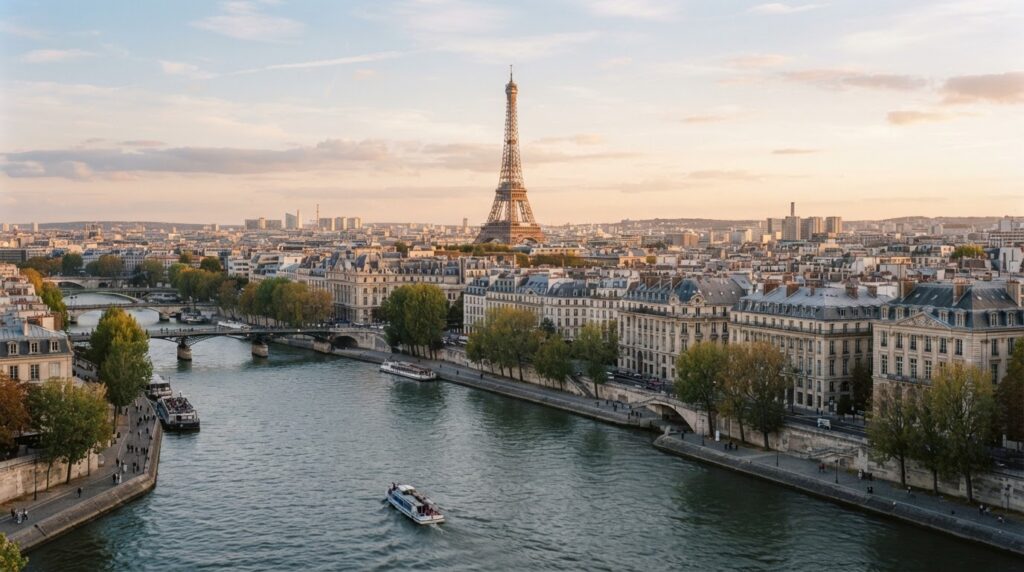
The Seine is a useful line for orienting yourself. The historic centre sits around the river, with bridges linking the Left and Right Banks. From there, Paris spreads outward through its arrondissements. This structure can make trip planning easier: group places that are near one another, then choose a separate area for another day. Crossing the city repeatedly can take more time and energy than a map suggests, especially when you stop to look, eat, or browse.
The central islands offer a strong introduction to Paris history. Île de la Cité is associated with the city’s early development and contains major architectural landmarks. Nearby, the Latin Quarter has a long academic and literary character, with bookshops, small streets, and institutions that reward slower exploration. On the Right Bank, the Louvre area, the Marais, and the grand boulevards each feel different despite their relatively short distances.
Choose neighborhoods by mood
Montmartre’s hillside lanes, stairways, and open views give the north of the city a distinct atmosphere. It is popular, so early or late visits can feel calmer than the middle of the day. The Marais combines historic streets with galleries, independent shops, food stops, and cultural institutions. Saint-Germain-des-Prés has literary associations and elegant streets, while Canal Saint-Martin is known for waterside paths and a more contemporary neighborhood feel.
There is no single “best” district for every traveler. Art lovers may want to stay close to collections and galleries; families may prefer a route that includes parks and open spaces; first-time visitors may value convenient access to major sights. Use an area as a starting point, not a checklist. A few hours spent noticing its streets and public squares can be more satisfying than rushing through several districts without a break.
Balance landmark visits with open-air time
Paris has a remarkable concentration of museums and monuments, but indoor visits can fill an entire trip if they are not paced. Select one major museum or landmark for a day, then add a walk, garden, or neighborhood meal. The Louvre, Musée d’Orsay, and other major collections can require advance planning, and opening arrangements can change. Check each institution’s official visitor information before making a schedule.
Gardens make a welcome counterpoint to galleries. The Tuileries connect the Louvre area with Place de la Concorde, while the Luxembourg Gardens offer formal paths and seating on the Left Bank. Parc des Buttes-Chaumont has a more dramatic landscape, and the Bois de Vincennes and Bois de Boulogne are much larger green spaces at the edge of the city. These places are not just pauses between attractions; they show how Parisians use public space.
Follow the river and look up
A Seine-side walk reveals the city at a human scale. Instead of treating a river cruise or bridge as a quick photo stop, use the water as a route between landmarks. Notice the changing stonework, bookstalls, bridge details, and views of the riverbanks. The experience shifts with the light and season. A slow walk can also help you see how historic monuments sit alongside ordinary streets and modern life.
Paris is equally rewarding when you look above street level. Courtyards, iron balconies, rooflines, church towers, and the varied façades of the arrondissements tell stories about different periods of urban growth. You do not need to know every architectural style to enjoy them. A simple habit of looking beyond shopfronts and taking a side street can reveal more than following a straight line from one famous place to another.
Plan a flexible day
For a first visit, choose one anchor in the morning, one nearby area for the afternoon, and an unhurried evening plan. A museum morning might lead to a riverside walk and dinner in a different neighborhood. A day focused on Montmartre can combine its hilltop streets with cafés and a nearby museum or park. Leave time for meals, transit, weather changes, and simple rest. Paris is a walking city, but long days on stone streets can be tiring.
For a longer stay, set aside time for areas beyond the postcard centre. A market visit, a small local museum, or a walk through a less familiar district can make the trip feel more personal. If you are traveling with children or anyone who needs frequent rests, shorten the route and plan accessible breaks. Public transport and step-free access vary by station and venue, so confirm details with official providers before you go.
Travel thoughtfully
Paris is a living city, not a backdrop built solely for visitors. Keep noise low in residential streets, follow posted rules in gardens and religious spaces, and avoid blocking narrow pavements for photos. Use marked crossings, take litter with you, and choose local businesses where possible. If a place is crowded, consider moving to a nearby street or returning at another time rather than adding pressure to a single viewpoint.
Before your trip, verify opening hours, ticket procedures, temporary closures, and transport details on official websites. These practical details change, and a guide written months earlier may no longer reflect them. The official resources below are useful starting points. This article is independent travel information; it does not sell tickets or take reservations.
Frequently asked questions
How many days are useful for a first visit?
Three or four days can give you time for a few major sights and several neighborhoods, but the ideal length depends on your pace and interests. A shorter trip works best when you group nearby places and accept that you will not see everything.
Can Paris be enjoyed without visiting every major museum?
Yes. The city’s streets, riverbanks, gardens, architecture, food markets, and smaller cultural spaces are experiences in their own right. Choose museums that match your interests and leave room for outdoor exploration.
What should travelers check before planning a museum day?
Confirm the museum’s current opening hours, admission process, entry requirements, and accessibility information through its official website. Do not rely on old schedules or third-party listings for details that can change.
Official resources
An itinerary that leaves room for Paris
For a first visit, avoid scheduling a museum, a long neighborhood walk, and a distant dinner in a single day. Choose one anchor in the morning, take a slower lunch, and leave the afternoon open for a nearby street or garden. Timed tickets can help with major attractions, but check current entry rules and transport options before you set a route. Paris is easier to enjoy when you have time to notice ordinary details between famous landmarks.
Use transit for longer cross-city journeys and walk within a neighborhood once you arrive. Check the route back to your accommodation before a late evening, and allow extra time if you are carrying luggage or changing stations. If rain changes the plan, choose a museum, covered passage, or café near your current area rather than crossing town for a single photo. For a more comfortable stay, compare the full lodging cost and transit access with our flexible itinerary guide.